
- 01

Supplier audit
Verification of installed capacity, processes, controls and track record before any scale order.
- 02

Pre-production approval
Sample and datasheet formally approved — the reference that applies to the entire batch.
- 03

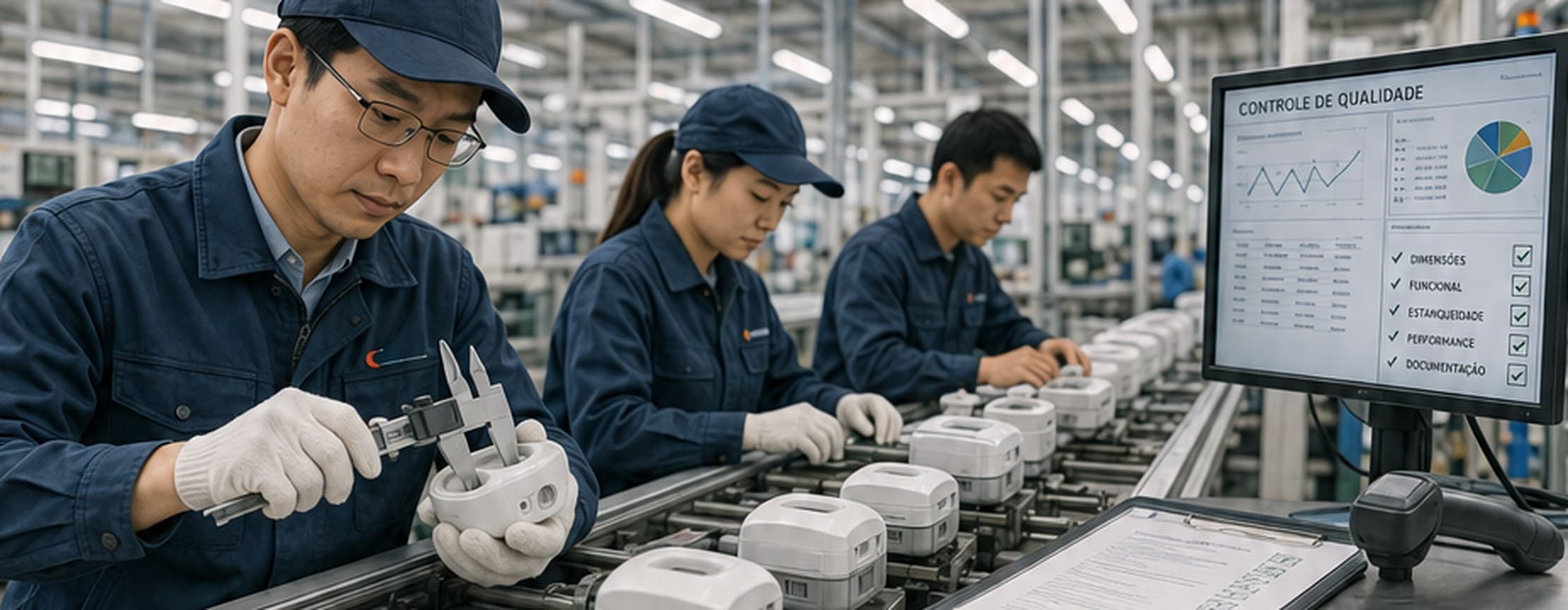
In-process inspection
Follow-up during production to correct deviations while correction is still cheap.
- 04

Testing & documentation
Functional and compliance tests, with report and photographic records attached to the batch.
- 05

Final inspection
Checking the finished batch against the approved sample, using the agreed sampling plan.
- 06

Loading supervision
Loading follow-up, quantity check, packaging and container seal verification.
Non-conformity
Correction, re-inspection and documented release. The cycle repeats until the batch meets the agreed criteria.
Traceability
Evidence per batch and per stage, archived and retrievable at any time.
Approved for shipment
Release is a documented act — not an informal last-minute decision.
The same standard can be applied to Brazilian suppliers in operations by Chinese investors buying in Brazil.
Questions about quality
What happens when a batch fails?
The batch is segregated and the supplier receives the report with the evidence. We define correction or replacement, re-inspect and only then release. Nothing ships with an open non-conformity.
How does traceability work?
Each stage produces evidence linked to the batch: audit report, approved sample, process photos, test reports and final inspection report. This allows the history of any shipped item to be reconstructed.
Do you apply this standard to Brazilian suppliers?
Yes. The same audit, inspection and evidence standard applies to Brazilian suppliers in operations by Chinese investors buying in Brazil.
Who defines the acceptance criteria?
The criteria are agreed with you before production, along with the sampling plan. Defining this afterwards, with the cargo ready, is the most expensive argument in foreign trade — which is why it happens first.